Skip to content

WATER & WASTEWATER TREATMENT​

WATER & WASTEWATER TREATMENT

Markets

WATER & WASTEWATER TREATMENT

MC Squared provides specialized geotechnical and materials testing services for water and wastewater infrastructure projects. Our expertise supports the development of reservoirs, treatment facilities, pump stations, and distribution systems, ensuring structural integrity and long-term performance under varying environmental conditions.

We prioritize cost-effective, sustainable solutions that enhance water quality, protect public health, and improve system reliability. Our team collaborates with municipalities, utilities, and engineering firms to optimize designs, mitigate risks, and support regulatory compliance throughout the project lifecycle.

Through advanced testing methodologies and a deep understanding of subsurface conditions, we help deliver resilient infrastructure that efficiently manages water resources and withstands future demand.

WATER & WASTEWATER PROJECTS

WATER & WASTEWATER
PROJECTS

Scott Candler Reservoir, DeKalb County, Georgia

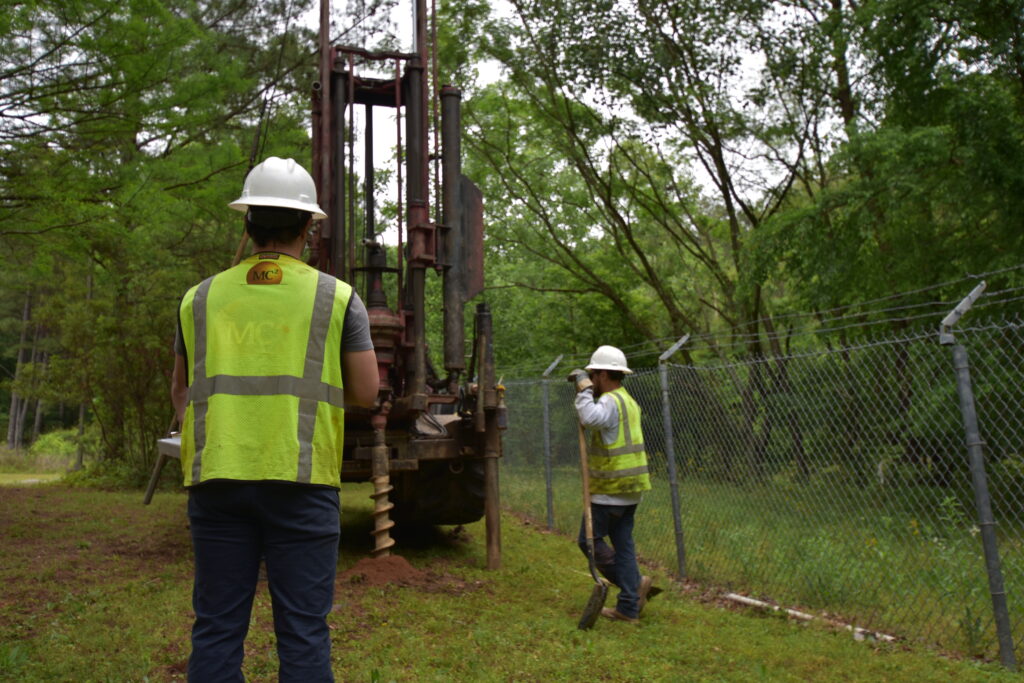
Served as the owner’s representative onsite as well as providing construction materials testing and inspection services, such as concrete and soils testing, and offsite lab concrete compression testing. Also provided remediation solutions associated with the removal and replacement of a 24” groundwater runoff drain pipe on the northside of the reservoir dam.

Caloosahatchee River West Basin Storage Reservoir (C-43 WBSR)

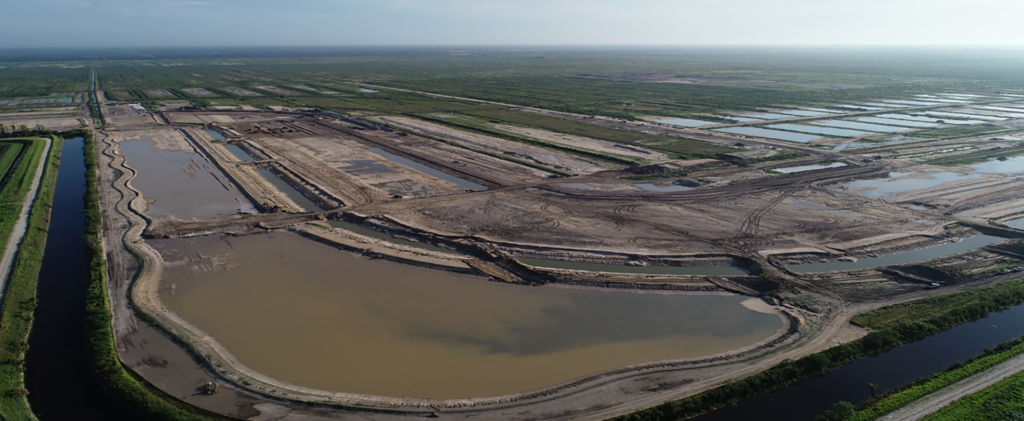
Developed by C-43 Water Management Builders for the South Florida Water Management District (SFWMD) and U.S. Army Corps of Engineers (USACE), the C-43 West Basin Storage Reservoir is a 170,000-acre-foot infrastructure project designed to store excess freshwater from the Caloosahatchee River, stabilize salinity levels, and prevent algal blooms. MC Squared provided critical laboratory management, construction materials testing, and quality control, ensuring compliance with USACE standards. Our contributions—including testing 22 million cubic yards of embankment, 110,000 tons of soil-cement armoring, and 19 miles of soil-bentonite cutoff wall—have helped ensure the reservoir’s durability, reliability, and long-term impact on Florida’s water resources and communities.